
Blame Canada!
NY Times Prefers to Blame Canadian Smoke on "Climate Change"

What is it with Canada? As I reported on July 15, a Canadian woman was arrested and detained by ICE for slapping a MAGA girl on a New Jersey Boardwalk. Today, on July 16, Canada gets it revenge for her detention by blanketing the eastern half of the US with its leading export, smoke. Is Karen Bass running that country?
As of today, there are some 857 active wildfires ablaze in Canada, and, unfortunately, what happens in Ontario doesn’t stay in Ontario. From my current perch on Lake Erie, you can see the smoke, smell it, and all but taste it.

Instead of blaming Canada, as it ought, or at least investiging Canada’s failure to control its wildfires, the New York Times all too predictably blames climate change. Although the fires are admittedly not unusual for this time of the year, the Times assures us that what is unusual is the smoke-trapping “heat dome that has led to brutally high temperatures in the Midwest and the Northeast.” The heat, of course, is to be expected given that “climate change drives up global temperatures past record levels.”
The claim about global temperatures is unverified and. unverifiable, but the “brutally high temperatures” can be fact checked. In Chicago, the average high temperature for mid-July is 85. The average high for the week preceding the smoke was 86. In Kansas City, the average July high is 90. In the week when the temperatures were “brutally high,” the average was 89.8 and the high temperature 92.
In fact, the high temperature so far this summer in Kansas City is a stunningly low 95. This cooling is not a fluke. In the last twelve years, Kansas City has experienced only six days in which the temperature was 100 or above, an average of ,5 100-degree days per year. By contrast, in the three year period from 1934-1936, the city averaged more than 40 100-degree days per year, topping out with 53 100-plus days in 1936. The subsequent three years were not much better. The city averaged 15 days above 100 during that span.
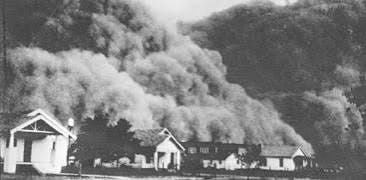
Canadian smoke is bad enough, but in those Depression-era, drought-stricken, dust bowl years. even city dwellers had to seal their windows shut to keep half of Kansas from blowing through. Air conditioning would have made a huge difference, but for the great majority of Americans, that reprieve was years down the road.
For Europeans, if the climate alarmists have their way, that day may never come. Post-FIFA, the petty tyrants who manage the EU will have to deal with the pushback from the millions of their subjects who have experienced the wonders of air-conditioning, either in person or through their friends’ videos. Saving the earth is down the road. Saving grandma is here and now.

The alarmists rely on the media to maintain their sway over public opinion. Despite some disruption from social media, this has been painfully easy to do. Big Media need only highlight those days and places where the temperature exceeds the norm and ignore those that defy alarmist orthodoxy. Rinse and repeat.
Yes, New York City has had a warm summer. We heard all about that, but its hot streak ended two weeks ago. That heat cycle played no role in trapping the smoke. In the week following the 4th of July, the city’s average high temperature was nearly three degrees below normal. That reprieve, of course, did not make the news. In the upcoming week, temperatures will again hover right around an un-newsworthy mean.
However hot, veteran New Yorkers scoff at the summer of 2016, They remember the summer of 1977. That summer the city endured an asphalt-melting heat wave with temperatures reaching 104 degrees in Central Park. Unable to meet the demand, the city’s power grid crashed, and the city plunged into a 25-hour mid-summer blackout. This being New York, rioting ensued.
Filmmaker Spike Lee commemorated 1977 in the watchable 1999 film The Summer of Sam. That year, New Yorkers endured not only the heat, the blackout, and the riots, but they also had to deal with a serial killer on the loose. The self-styled “Son of Sam” was finally captured as the heat wave wore itself out.
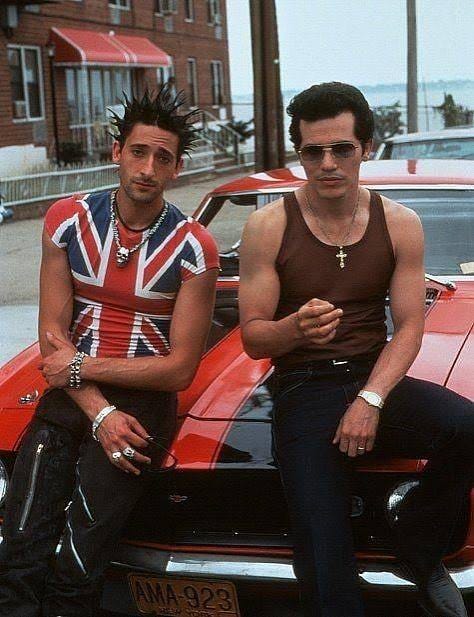
Leguizamo, right, denying an Italian actor the Guido role in Summer of Sam
Playing the lead in Summer of Sam, in arguably the best role of his career, was Colombian-born actor John Leguizamo. In the years since, Leguizamo has taken another lead, that in protesting Hollywood’s treatment of Hispanic actors. Said Leguizamo, “Back in da day! I wasn’t bad looking! ‘Too ethnic’ i was told. What they meant was they weren’t casting Latinos! And they meant it!”
Leguizamo has been particularly outspoken about the industry practice of casting “white” actors in Latin and Spanish roles. For the record, in Summer of Sam, he played “Vinny,” an Italian American. In 2026’s The Odyssey, he plays the Greek Eumaeus.
A climate change activist, Leguizamo will voice the character “Sid” in the upcoming alarmist cartoon, Ice Age 6, a film that “mirrors real-world climate topics by following the animated herd as they navigate extreme environmental changes, including global warming.” I don’t know Sid’s ethnicity, but my guess is he’s not a Colombian.
Umm blame Canada? Well, yes and umm, no.
Historically the Canadian (and American) idea that forest fires should not be tolerated traces back to the idea that trees constitute a valuable resource that should be protected - so everyone "back then" (WW1 era) knew about the role of fire in forest renewal, but generally agreed that resource protection outweighed long term renewal.
Since then, however, we've kept the "fight all fires" idea, but stopped most lumbering - meaning that the forestry roads are not being built or maintained. As a result fires are harder to fight and, where "preservation" agendas have won out, both larger and hotter due to the fuel buildup.
So yes, you can blame Canada because not killing trees to sell lumber to Americans is seen as a good thing in Ottawa and Vancouver, while fighting fires to preserve the lumber resource is seen as an automatic must do in Victoria, Quebec city, Toronto and Edmonton. The one position is stupid, the other stupider, but that's Canada.
And no, you can't blame Canada because much of the U.S. behaves in nearly the same way: trying hard to kill forestry industries while fighting forest fires to protect the resource those industries would depend on if allowed to prosper.
Smoke - Chinada's biggest export.
Is Chinada a sister country with L.A.? Or is it Cuba?