

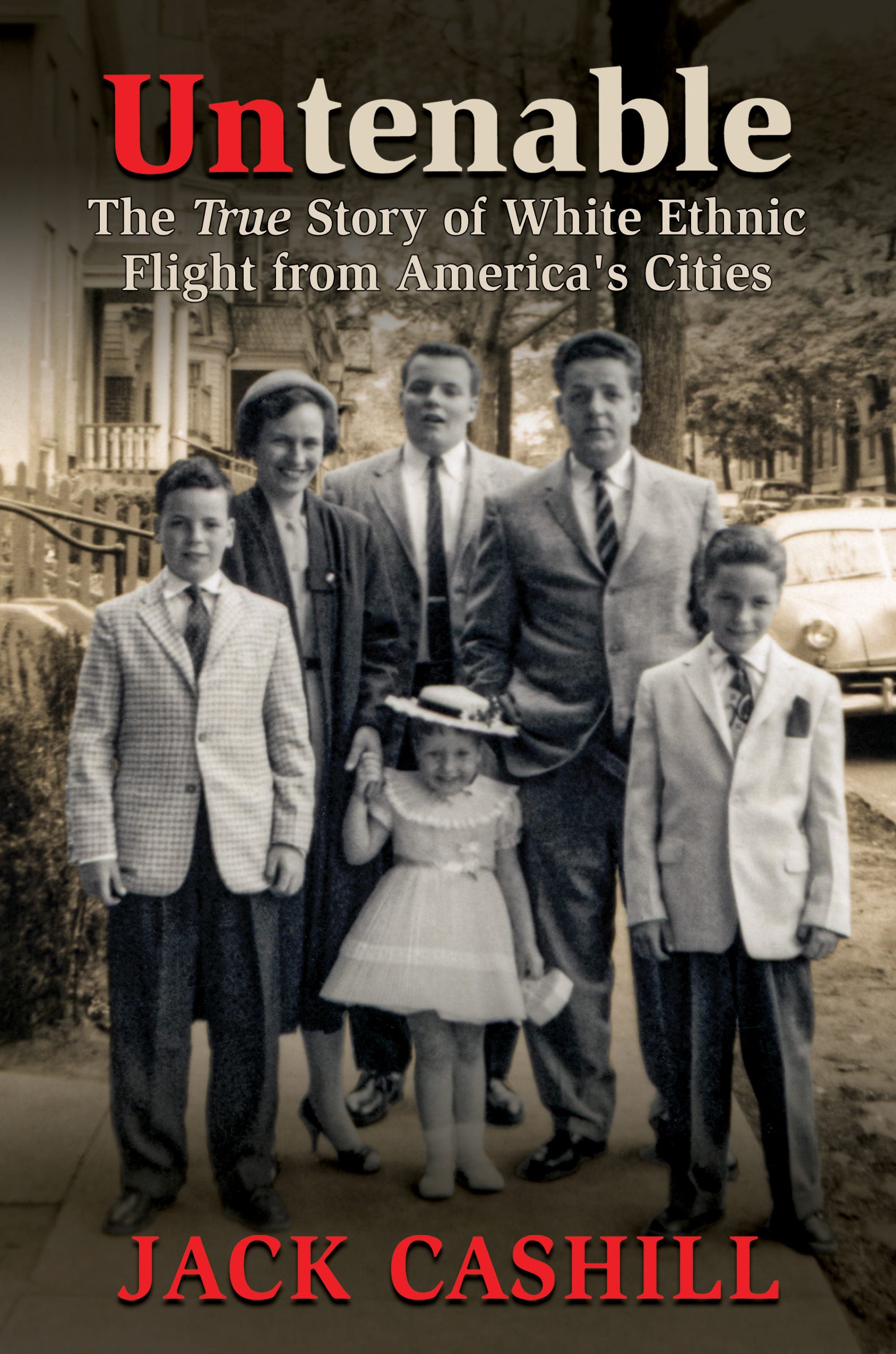
For no reason I quite understand, the US Census Bureau waits 72 years before releasing a searchable version of a given census. I was fortunate when researching my 2022 book, Untenable: The True Story of White Ethnic Flight from America’s Cities, that the 1950 Census had just been released. My family moved to this Newark, New Jersey, block in 1953, and it is the block on which I grew up.
The savvy reader will need no instruction on why these urban blocks worked in 1950s and why they no longer do. The history of this one block should suffice to tell the story. As Ayn Rand once observed, "We can evade reality, but we cannot evade the consequences of evading reality." For eight years Obama evaded that reality. As we have seen in recent days, President Trump is refusing to.
My street, Myrtle Avenue, ran one way south to north, just one block. Its housing stock was as diverse as that of any single street in America: faux-elegant apartments, semi-trashy apartments, single-family homes, duplexes, triplexes, row houses, and one funky old grocery store in midblock.
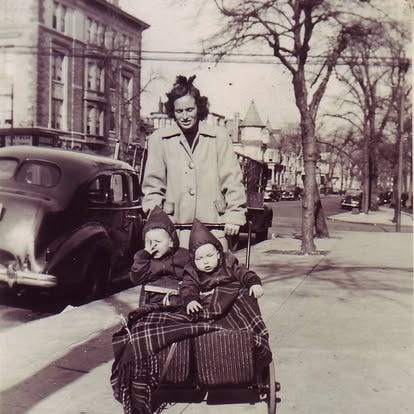
In 1950, immigrants from fourteen countries lived on Myrtle but no Blacks. By the time my family arrived in 1953, three Black families lived in the triplex next door to us. In time, thanks to my paper route, I knew everyone who lived on the street. According to the 1950 census, “everyone” added up to 363 people.
In this era, working-class people of all races married and usually stayed married. In 1950, there were 83 married couples on Myrtle, 79 of them with an employed male “head” of household. Two of those not employed were retired; two others were unemployed. Two widows also headed households. Of the 79 households with a working male head, 30 also had a working female spouse. Today, I suspect, many blocks in Newark cannot boast of a single male married head of household.
In a world without air-conditioning, people congregated on the stoops as soon as the weather permitted. The narrowness of the street encouraged adults to communicate with the neighbors across it. No one retreated to their back yards, as suburbanites famously do, because few of us had a backyard to retreat to. Besides, the front was where the action was.
“There must be eyes upon the street, eyes belonging to those we might call the natural proprietors of the street,” wrote Jane Jacobs in her classic work, The Death and Life of Great American Cities. On Myrtle Avenue, there were lots of eyes and many natural proprietors. Better still, in a neighborhood like ours with more than a few shift workers, someone was inevitably sitting on his or her stoop at any time of day.
Based on the occupations listed in the 1950 census, I doubt if there was a single college graduate on Myrtle. Short of lumberjack, I was hard-pressed to identify a blue-collar job not represented on this hardworking block.
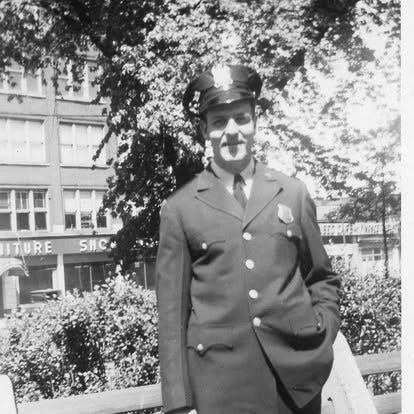
These jobs included motor repairer, packer, policeman, fireman, glazier, machinist, radio assembler, tool maker, crimper, rubber molder, casket maker, butcher, baker, cook, carpenter, motor inspector, beltmaker, trolley operator, soda clerk, beautician, telephone operator, stenographer, undertaker, carter, bus driver, plater, elevator operator, super, shipper, and, janitress.
Other than perhaps casket maker, the occupation that made me smile most was “janitress.” This was a woman who embraced her sex and took pride in her work. Note, too, that very few of these jobs involved working for a large manufacturer. The idea has been floated ad infinitum that the collapse of Newark and other industrial cities was caused by the loss of major manufacturers. This claim does not rise to the level of half-truth.
Even more dubious is the claim of professional race baiters like Ibram X Kendi that the GI Bill was a welfare program and a racist one at that. The men, Black and White, who gave up years of their lives to the service of their country, might object to the word “welfare.” The reward for that service was minimal.
With growing families and limited incomes, few young, working-class couples could afford to buy any kind of house anywhere, VA loan or no. As a result, on Myrtle Avenue in 1953, only a handful of nuclear families lived without relatives or boarders in a home they owned. Many extended families doubled and tripled up.
In 1954, with the ten-year clock running down, my parents made their move. More prudent than most, they put a bid in on a $7,000 home. They did not go “sprawling into the subdivided woods,” as antiracist guru Ta-Nehisi Coates imagined they would. They bought an 1880s-vintage fixer-upper halfway down the street, number 29 Myrtle. An elderly female boarder came with the house. We would live there for the next ten years.
In “The Case for Reparations,” an overpraised article in The Atlantic, Coates argued that housing segregation wasn’t simply the work of individual home owners. It was instead the intended result of government policy. “White flight,” he insisted, “was not an accident—it was a triumph of racist social engineering.”
This isn’t sociology. This is conspiracy theory. The government has always been more clumsy than clever. In Newark, the authorities would socially engineer us out of our homes in the near future simply because we were in the way. Reading Coates’s books and articles, I get no sense that he has ever spoken to a working-class White person. Few members of the woke elite ever do.

In 2008, for a moment, Barack Obama chose not to evade reality. Speaking to a largely Black congregation on Father’s Day, candidate Obama acknowledged why blocks like Myrtle Avenue have ceased to exist. Said Obama, “too many black fathers” were missing from “too many homes.”
Obama made the case that fatherless children were five times more likely to grow up poor, nine times more likely to drop out of school, and twenty times more likely to get into serious trouble than children who grow up with both parents. Those absentee fathers, Obama scolded, “have abandoned their responsibilities, acting like boys instead of men.”
No sooner did Obama scold these baby daddies than one of them, Jesse Jackson, threatened on a hot mic “to cut [Obama’s] nuts off.” Chastised, Obama quickly retreated to his fictions, finding it much easier to fix blame on white America than to fix problems within the black community.
Jesse Jackson is history. So too is Barack Obama. With Trump in the White House people are speaking more honestly about race than they have in generations. Now if we can only get Big Media to listen.
Moynihan had it right!
I keep waiting for the truth to catch up with Obama.