

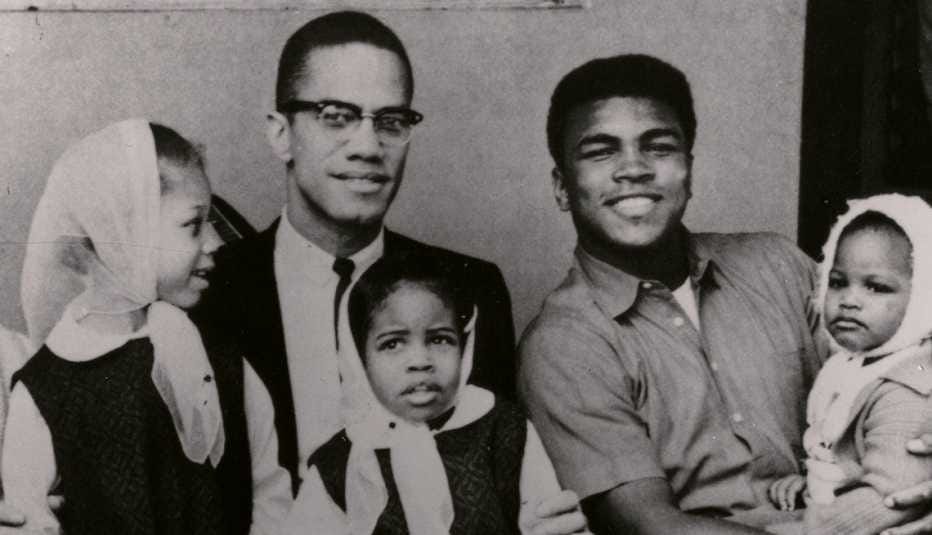
Watching the buffoonish Al Sharpton emcee the 63rd anniversary of the March on Washington Friday, I was reminded how prescient Malcolm X was when he called the original “The Farce on Washington.” Say what you will about Mr. X, but he was not afraid to speak his mind. That fearlessness cost him his life, a life that the newly un-christened “Muhammad Ali” chose not to save.
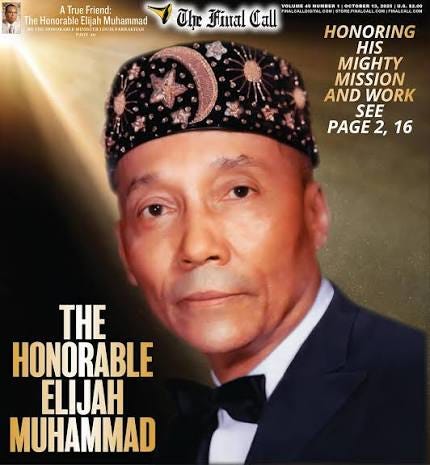
A few months after the August 1963 march, Malcolm gave Nation of Islam (NOI) chieftain Elijah Muhammad the excuse to suspend him when he described JFK’s assassination as a case of the “chickens coming home to roost,” a line the Obamas’ pastor Jeremiah Wright appropriated to describe 9-11. Malcom’s real offense, however, was his continued grumbling about Muhammad’s flouting of the NOI’s sexual code. The “Messenger” was beginning to see Malcolm not as an acolyte, but as a rival and a threat.
Three months after the JFK assassination, Cassius Clay was scheduled to fight the ever menacing world heavyweight champion Sonny Liston, a fight almost no one thought the young Clay could win.
Still suspended from the NOI, Malcolm asked Elijah Muhammad if he could watch over Ali who was in Miami training for the fight. “You will not in any way be representing us,” Muhammad told him, “because it’s impossible for Cassius to win.” The whole fight, Muhammad believed, would be an “embarrassment to the Nation of Islam.”
Malcolm went to Miami anyhow—as a “private person.” He went because he was fond of Clay, and he believed in him. The night of February 25, 1964, found Malcolm in a front row seat cheering wholeheartedly as his protégé battled the fearsome Sonny Liston.
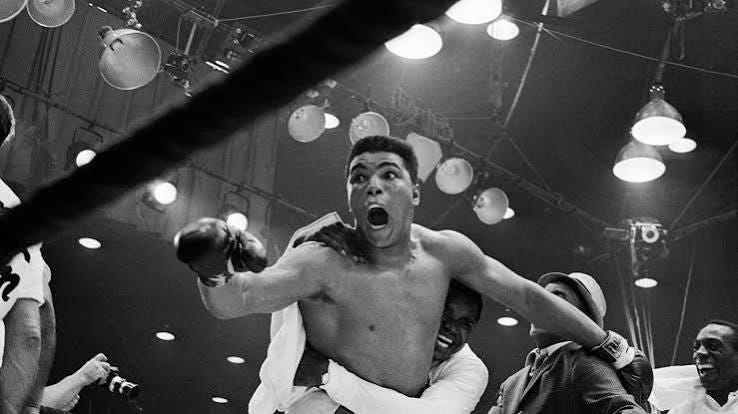
Even Ali couldn’t believe he won
When Sonny Liston failed to answer the bell at the beginning of the seventh round, the Honorable Elijah Muhammad had something of a revelation. In a heartbeat, he decided that perhaps boxing wasn’t such an unworthy enterprise after all. Immediately after the fight, he called Ali and wooed him hard.
At a press conference the day after the Liston fight, Ali announced his allegiance to the Nation of Islam and shared with the world his new name. That name makes for a good trivia question. It wasn’t Muhammad Ali. It was Cassius X. The rejection of “Clay” horrified his parents, especially his father, whose name had been devalued in every sense of the word.
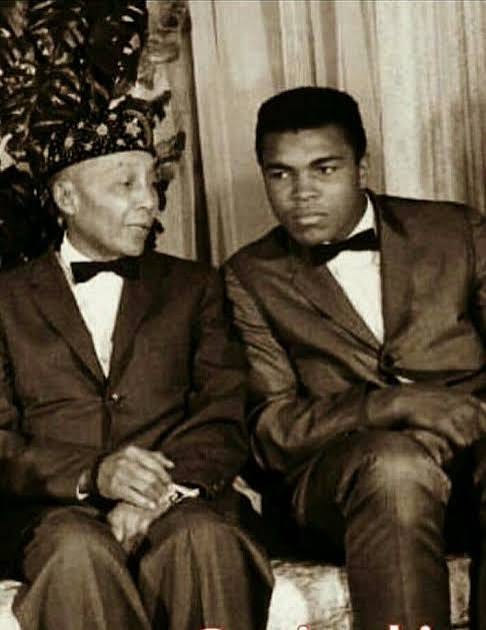
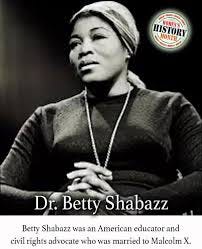
A day later at the annual Nation of Islam convention, Elijah Muhammad joyously announced that “Clay whipped a much tougher man and came through the bout unscarred because he has accepted Muhammad as the messenger of Allah.” This turnabout dismayed Malcolm and his wife, Betty Shabazz.
Shabazz remembered all too well the denunciations of Clay before the fight, the hysteria about how he would “bring disgrace to the Nation of Islam,” and on and on. “All of a sudden,” she recalled, “they were breaking their necks, trying to get close to the heavyweight champion.”
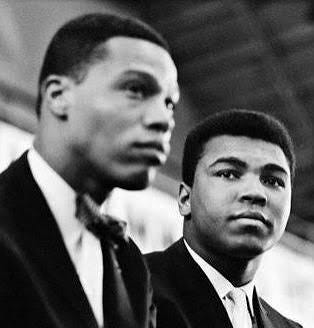
In the Nation, an Arabic name was bestowed on an aspirant only sparingly. Even after his years of dedicated service, Malcolm remained merely Malcolm X. Weeks after the fight Muhammad made an exception for Clay, giving him the name “Muhammad Ali.” That new name came at a price. The born again champ had to denounce Malcolm X, which he proceeded to do.
Malcolm was quitting the Nation just as Muhammad Ali was enlisting. “I was a zombie then—like all Muslims,” Malcolm told biographer Alex Haley about his life in the Nation. “I was hypnotized, pointed in a certain direction and told to march. Well, I guess a man’s entitled to make a fool of himself if he’s ready to pay the cost. It cost me twelve years.” Ali was about to live out his own version of 12 Years a Slave, a slave, that is, to Elijah Muhammad.

Nothing if not courageous, Malcolm continued to criticize Elijah Muhammad. Soviet style, Muhammad dismissed Malcolm’s criticism as “mental illness” and ratcheted up the threat level. “The white man has offered rewards for people to lie on the Messenger of Allah,” Muhammad prophesied in June of 1964. “This hypocrite is going to get blasted clear off the face of the earth.”
In November 1964, an FBI informant told the Bureau that a fatwa had gone out on Malcolm’s head. A week later in Muhammad Speaks, the house organ of the Nation of Islam, Louis Farrakhan, then Louis X, invited Malcolm to imagine that head rolling down the sidewalk.
The death threats rattled Malcolm, but they did not discourage him. Treachery did that. “Worse than death was betrayal,” he would concede. And no betrayal cut as deeply as Muhammad Ali’s. Ali’s public rejection of Malcolm “hurt Malcolm more than any other person turning away that I know of,” Betty Shabazz, Malcolm’s wife, told Ali biographer Thomas Hauser.
Louis Farrakhan, then Louis X, reportedly orchestrated the plot to kill Malcolm X
As the death threats morphed into murder plots, Betty Shabazz begged Ali’s intercession. “You see what you’re doing to my husband, don’t you,” she pleaded after a chance encounter with Ali. Ali blew her off, disingenuously raising his hands in the air and saying, “I’m not doing anything to him.”
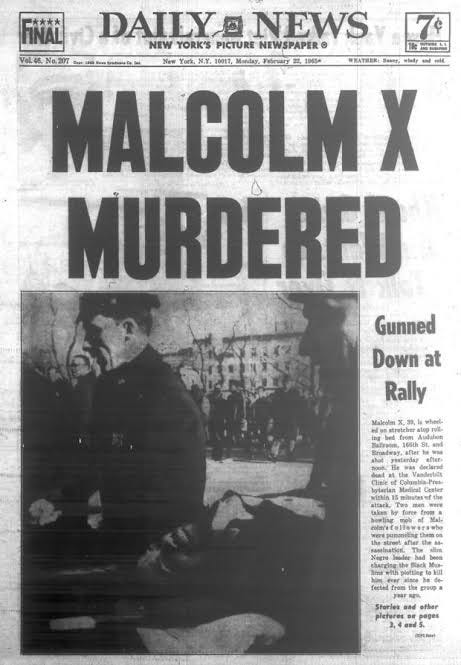
Shabazz was with her four children at Harlem’s Audubon Ballroom in February 1965 when an NOI death squad blasted Malcolm “clear off the face of the earth.” The autopsy report listed 15 “shotgun and other caliber bullet wounds.” A week after Malcolm’s murder, Elijah Muhammad declined all responsibility at the annual Saviour’s Day rally in Chicago. “They know I loved [Malcolm],” he contended. “His foolish teaching brought him to his own end.” Sitting prominently behind the Messenger on the platform and affirming his every word was Muhammad Ali.
“Turning my back on Malcolm,” said Ali 40 years after the fact, “was one of the mistakes that I regret most in my life.” To his credit, Ali came to grips with this tragic betrayal, however belatedly. The Ali faithful, however, have not. To this day, they maintain both Ali and Malcolm X in the same pantheon of mythic black heroes, a pantheon so mindlessly inclusive even Al Sharpton has a shot at getting in.
I do not know any of this history. Thank you for the lesson.
As a teen I worked a summer job two doors down from a NOI-run sandwich shop. Their food always smelled good, so I went in for something to eat. The black men, dressed in spotless white uniforms, prepared my order in total silence while glaring at me in "if looks could kill" fashion. It was an extremely uncomfortable few minutes before they handed me the sandwich.
It was delicious, but I never stepped foot in there again. It was an experience one dares not repeat.