

With the release this week of TWA800: The Full Story—A Navy Whistleblower Comes Forward, filmmaker Brian Lerch has shown the power of AI to penetrate the shroud of secrecy surrounding a seemingly mysterious event, in this case the July 1996 demise of TWA 800.
At the heart of Lerch’s documentary is the testimony of ten-year Navy vet, William Teele. Teele has been trying to tell his story for years. I first spoke with him in 2014 and included his account of events in my 2016 book TWA 800: The Crash, The Cover-up, The Conspiracy.

William Teele, back in the day
A few paragraphs in print does not do Teele’s account justice. With the help of AI, Lerch was able to dramatize Teele’s 15-minute narration by recreating the environment in which Teele operated. In the first 45 minutes of The Full Story Lerch walks the viewer through the details of the investigation, including its many failings.
One incontestable failing is that no single public proceeding has ever explored the case as a whole—the physical evidence, the witnesses, the CIA animation. the dissenting opinions. By segmenting the public hearings, many of the government’s arguments have gone unchallenged. That said, so balanced and apolitical is Lerch’s retelling that a mainstream reviewer would be hard pressed to criticize it.
The sobriety of Lerch’s reporting serves to enhance Teele’s credibility. Teele helps himself by delineating what he knows from what he doesn’t. On July 17, 1996, Teele and other sailors spent the afternoon qualifying on small arms fire while the USS Carr, a frigate, cruised the W-105 operating area south of Long Island.
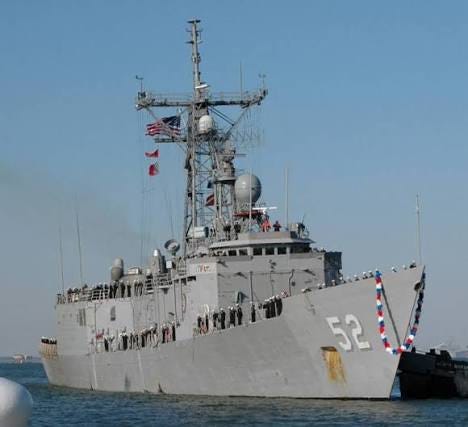
The USS Carr zig-zagged out of the operating area
That evening found Teele in Carr’s Combat Information Center (CIC). The ambitious young sailor spent considerable time there trying to absorb as much as he could about on-board communications. As Teele describes it, there was “a lot more Khaki”—meaning officers—than usual in the CIC that night.
The brass were there to observe the evening exercise. It involved a Lear jet towing a “target” and a simulated missile attack on that target. Says Carr, “No live missile was supposed to leave the rail.” The job of the men in Carr’s CIC was to build a radar picture and convey that imagery to the other ships and subs in the battle group.
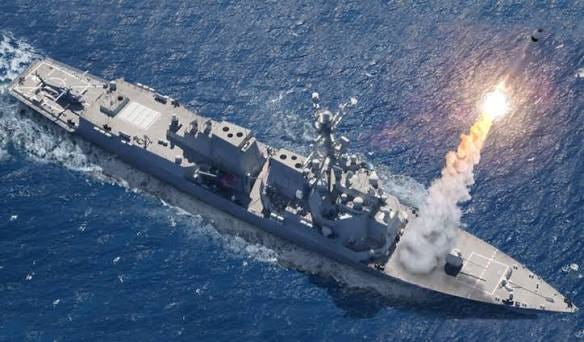
Aegis combat system in action
Teele was sitting close enough to the action to hear the response from the other ships in the group. “Birds away,” he heard, nothing unusual in that, then “splash.” Only when Teele heard an anxious “wait a minute” did he sense something amiss. How seriously amiss he learned a moment later when he heard, “We hit an airbus!” At the time, he had to ask what an airbus was. In fact, the missiles had hit TWA Flight 800, a Boeing 747 with 230 people on board bound for Paris.
The atmosphere in the CIC changed abruptly. Capt. Keith Wray called for radio silence and ordered the men to stop talking. Teele listened to one end of a secure phone conversation between Wray and an unknown officer on another ship. “How could anyone make this mistake?” he heard a frustrated Wray lament. Wray then left the CIC for the more restricted Radio Central.
Shortly thereafter the USS Carr began high-speed evasive maneuvers, zig-zagging its way out of the W-105 and toward Bermuda, an unplanned stop. The quartermaster expressed dismay when he learned the destination as he had not arranged the appropriate charts.
In Bermuda, there was no liberty. Sailors had to stay on board. Teele and his colleagues were ordered to gather all the relevant CIC logs and then vacate the CIC. When he returned the logs were gone as were the strange men who had come on board to gather them. As one of only a handful of sailors privy to the damning communications, Teele was threatened with ruin should he talk, let alone go public with what he knew.
Years later, Teele reached out to Capt. Wray to urge him to share what he knew. Teele allowed me to see their communications. Wray deftly danced around Teele’s request. Just a year or two ago, one of Teele’s shipmates contacted me out of the blue and confirmed, to the degree he could, Teele’s account.
In the course of his narration, Teele answered the question that I have been asked a thousand times. With 200 or more sailors on board many of the ships involved, how is it that no one has contacted the media? As Teele explained, the ships are highly compartmentalized. On the USS Carr, only a few other sailors knew what he knew. Even on the ship and/or sub that fired the missile, he added, not many would have known enough to be a reliable witness, and these men would have been threatened into silence.
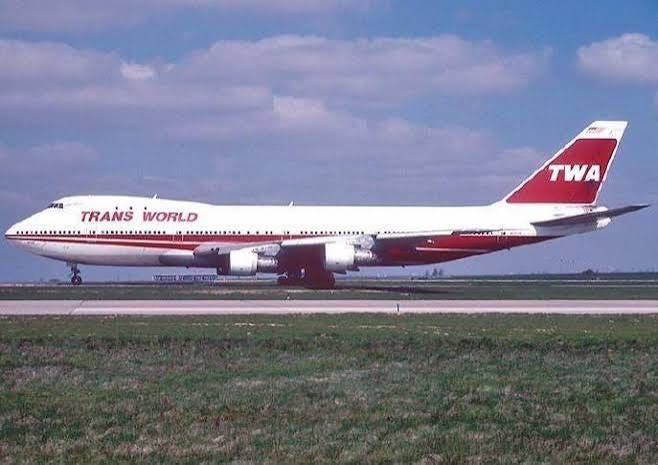
No mid-air explosions of a 747 before or since
Carr’s own journey speaks to the problems a whistleblower would have. He started making his own videos years ago to explain what he knew. Only a few deep researchers gave him the time of day. Brian Lerch gave Teele more than time. He gave Teele a platform worthy of his story. As Lerch proves, an AI platform, when used responsibly, all but levels the media playing field.
I wonder if Capt. Wray is related to Christopher Wray.
I'll repeat my observation every time the subject arises. The early news footage of the TWA800 wreckage being assembled in the FAA hangar, in particular the floating seat cushions, revealed the telltale yellow residue of SAM rocket propellant. A missile doesn't require an explosive payload to bring down a target. A simple collision will suffice. It's not uncommon a missile test accidentally takes out a towed target drone. It can just as easily bring down a passenger jet.