

For all the ink spent on baby boomers—those of us born between 1946 and 1964—little of what has been written has been right. Film critic David Crow, for instance, speaks of “the culture Boomers created” and calls its creative products “major touchstones and measuring sticks by which 21st century alternatives are compared.” The flaw in his argument is that, for the most part, we didn’t create our culture. It was created for us.
We consumed it, all or in part. Creating the culture was the 1933-1945 cohort, arguably the most fortunate of all generations, too young for WW II or Korea, too old or settled for Vietnam. In the bellwether 1960s, just about all our movie stars, rock stars, pop intellectuals, writers, directors, artists, and radicals came from this demi-generation. Untested by war or Depression, they tilted casually left and pulled the culture with them.
The ideological offspring of these creators have largely dominated discussions of what that era was about. They only sometimes get it right. The movies often tell us more than the critics do.
Dazed and Confused, 1993
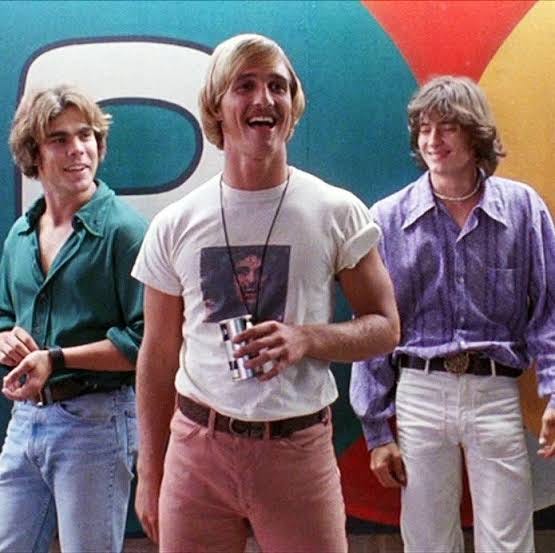
Set at the end of school year in 1976, Dazed and Confused has the virtue of being directed by a late-stage baby boomer. Texan Richard Linklater, born in 1960, knows the terrain. By this time in the cultural revolution, drugs, sex and long hair have become commonplace even among small town Texas kids. What has evaporated is the empty theorizing that justified the indulgence. “If I ever say these were the best years of my life,” says one of the kids, “remind me to kill myself.” Walk-on Matthew McConaughey wrote his ticket to stardom with an improvised "alright, alright, alright"
9. National Lampoon’s Animal House, 1978
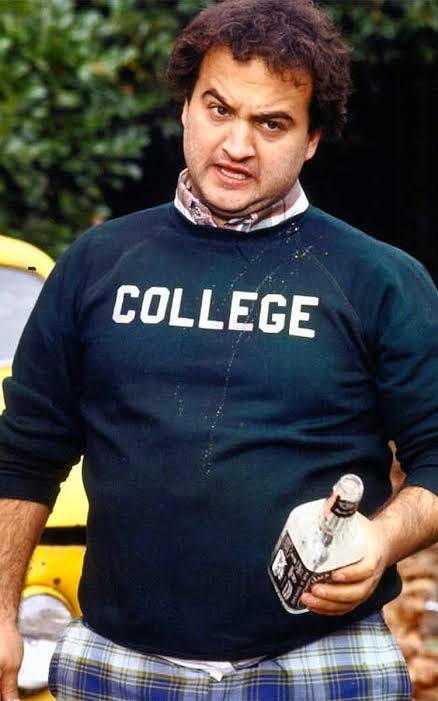
Animal House is set at the cusp of the cultural revolution in 1962. The anarchists of the Delta House—as imagined by the counter-revolutionaries of The National Lampoon— have yet to discover drugs and must still scheme to seduce women, but mayhem is something they have mastered. The one leftist pothead in the film, played by Donald Sutherland, is a figure of fun. “Fat, drunk, and stupid is no way to go through life, son,” Dean Wormer tells Flounder, but universities did not see real stupid until the late 1960s. Remakes are usually a bad idea, but a Delta House set at Yale circa 2026 would have great possibility.
Easy Rider, 1969
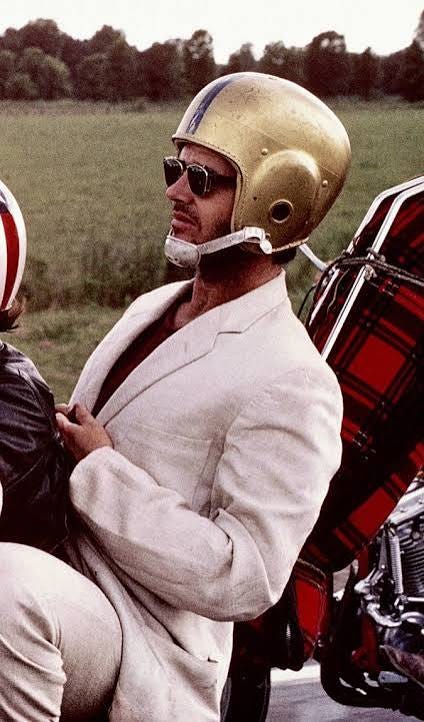
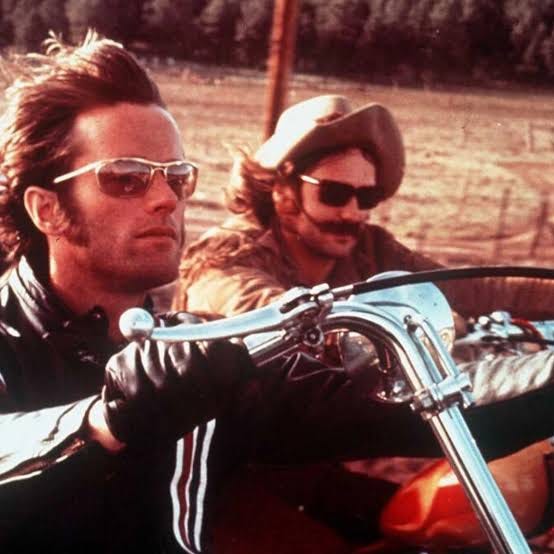
More popular than it deserved to be, Easy Rider was also more critical of its own culture than its young (and often stoned) audiences thought it was. Our Harley-riding heroes Wyatt (Peter Fonda) and Billy (Dennis Hopper) are sell-outs. They fund their cross country expedition with a cocaine sale. Despite the western lore of their names, they head east to Florida to retire on their dope money, much as their parents might have done. “We blew it, man,” Wyatt says of their misadventure just moments before some central casting rednecks render them martyrs. Only the sound track and the inspired presence of Jack Nicholson save the movie from the hippie gibberish of its improvised script.
The Big Chill, 1983
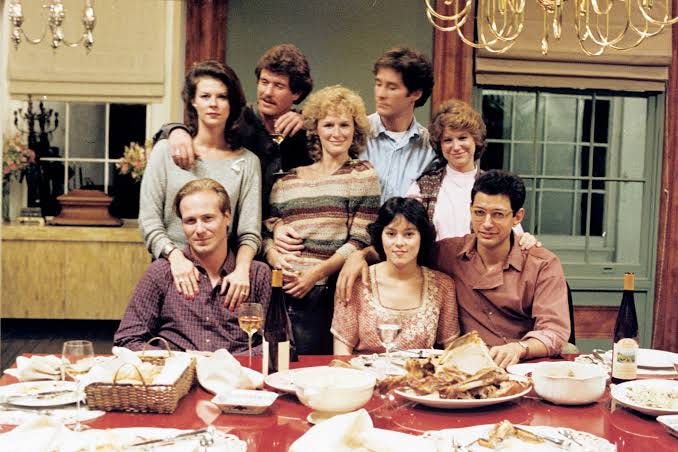
By the 1980s, veterans of the 1960s were accruing enough clout to memorialize their adventures of twenty years prior. John Sayles and Lawrence Kasdan, boomers both, made essentially the same movie. Kasdan made his The Big Chill with more money and less originality than Sayles’s earlier Return of the Secaucus 7. Both films involve a reunion of leftist college friends from the 1960s—in The Big Chill for a funeral of a suicide named Alex. Just about all the characters in both films mourn the loss of their ‘60’s idealism except Alex who “couldn't live with it.” I don’t imagine a Delta House reunion would have been quite so melancholy.
Full Metal Jacket, 1987
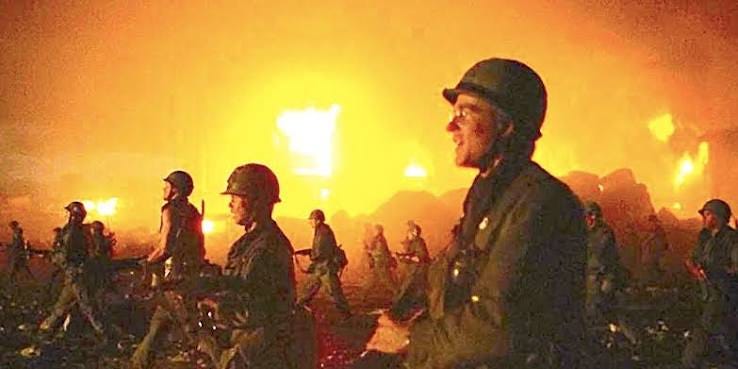
In addition to being the last of the free-range children, boomers were the last cohort of young people to share a fully common culture. With only a few regional variations, we all watched the same TV shows, saw the same movies, listened to the same music, and had the same heroes. In his uneven Vietnam film, Full Metal Jacket, director Stanley Kubrick did one thing better than has been done before or since: he captured the universality of boomer culture, In the critical scene, he has his US Marines march off to battle singing the theme song to The Mickey Mouse Club. On watching the film, I was tempted to sing along.
American Graffiti, 1973
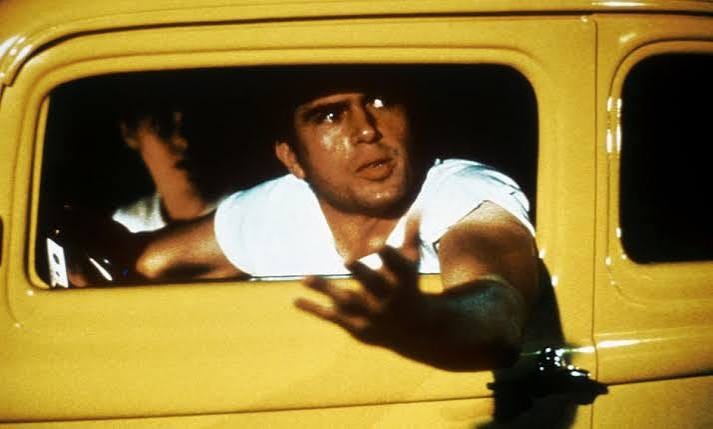
Like Animal House, American Graffiti is set in that cusp year of 1962, that last year of seeming innocence. The film also acknowledged that the 1960s would mean different things to different people. In the final scene Curt’s friends see him off as he flies back east to college. “Good night, sweetheart, it’s time to go” plays in the background, the final song in a wall-to-wall rock soundtrack. Curt, the credits tell us, will emerge as a writer in Canada, presumably there to dodge the draft, the classic 1960s stereotype. The hot-rodder John will stay behind only to be killed by a drunk driver. Nice guy Steve will also stay in Modesto and become an insurance agent. Terry “the Toad” will go missing in Vietnam. The culture may have been shared, but the responses to that culture defy easy classification
Platoon, 1986
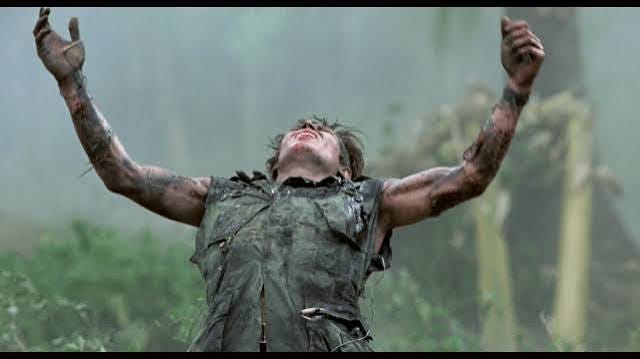
Arguably the best of the Vietnam movies, Platoon had the advantage of being written and directed by someone with real experience. Oliver Stone, born in 1946, served in Vietnam from 1967 to 1968, picking up a Purple Heart and a Bronze Star along the way. The zeitgeist Stone creates strikes the viewer as authentic, but in the climactic scene he abandons period music for Samuel Barber’s timeless, “Adagio for Strings, Op 11.” If the movie has a message, it is the one immortalized by Alexandr Solzhenitsyn, “The line separating good and evil passes not through states, nor between classes, nor between political parties either—but right through every human heart—and through all human hearts.”
Forrest Gump, 1994
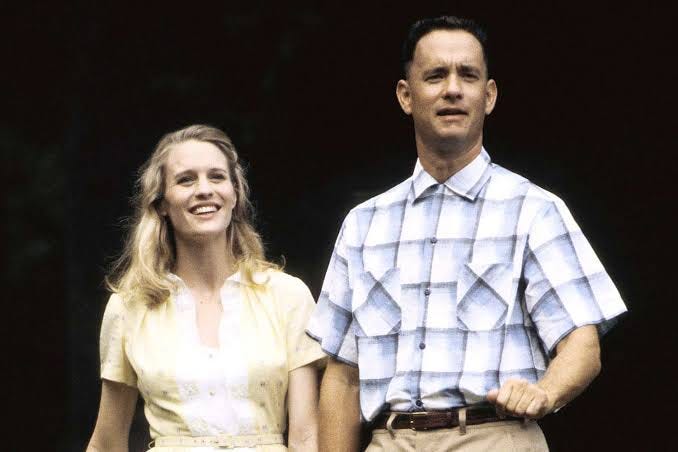
In Forrest Gump, director Rovert Zemeckis makes an unexpectedly powerful case against 1960s counterculture. While Forrest’s beloved Jenny is undone by what Roger Ebert summarized as “psychedelics and flower power, antiwar rallies and love-ins, drugs and needles,” Forrest, with his 75 IQ, sticks to the straight and narrow. This path leads him to college, football glory, heroism in Vietnam, entrepreneurial success, love, marriage, and fatherhood. Meanwhile, Jenny dies of AIDS. Could the verdict been more damning? Hollywood seems to have missed the message. Forrest Gump won the Oscar for best picture.
Field of Dreams, 1989

Easily forgotten amidst all the baseball lore in Field of Dreams is its ambiguous reflection on the 1960s. The protagonist Ray Kinsella, born in 1952—three years earlier than Kevin Costner who played him—rebels against his widowed blue collar father John and heads to Berkeley. There he meets wife Annie who lives out her strident 1960s fantasies at Iowa school board meetings, denouncing her critics as Nazi cows and chiding them for having missed the 1960s. Ray has moved beyond the ‘60s. So has the leftist writer Terrance Mann whom Ray feels compelled to contact. For both, baseball is the great universal, the all-American leveler that transcends race, class, and politics. The film suggests that the 1960s were something of a mass psychosis driven by children angry with their parents. Miraculously for Ray, the gods of baseball provide him a moment in time and place where/when he can atone for having callously rejected his father’s values. “Hey! Dad? You want to have a catch?” Pass the hankies.
The Graduate, 1967
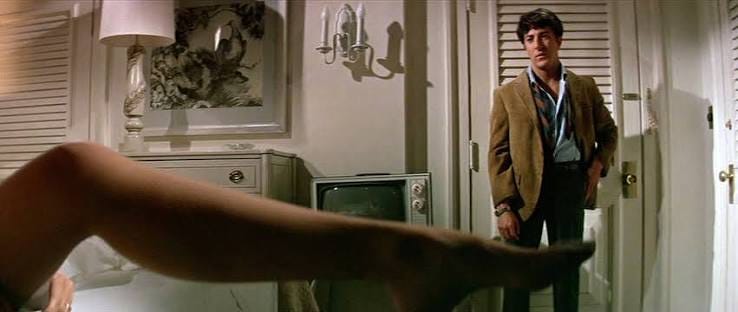
Although Dustin Hoffman was 30 when The Graduate opened, he ably played a guy 10 years younger. More than any movie before or since, this highly popular film spoke to its boomer audience in real time. Director Mike Nichols, 36 in 1967, seemed to be encouraging viewers to reject the corrosive bourgeois values of their parents—”it’s too late,” “Not for me”—and strike out on their own authentic journeys. But life isn’t all that simple. Nichols nicely sabotages his own message at film’s end. Under the strains of Simon & Garfunkel’s “Sound of Silence,” Benjamin and Elaine (Katharine Ross) sit mutely on the back of the bus they boarded to escape Elaine’s wedding. “Hello darkness, my old friend,” indeed! Nichols insinuates that the young boomer couple will eventually replicate the lives of their parents. In a way, I suspect, most boomers have—but without, alas, our parents’ humility.
I'm trying to recall when I first heard the term "Baby Boomer." Jack is right that the year 1962 was unsullied by the late Sixties "stuff"; that fall I was entering my Senior year in high school, busy applying to college, doing well in my favorite sport (sailing), and enjoying lots of male attention! Our dashing young President Kennedy and the glamourous, but intelligent, Jackie, made the news with their doings, and their young children were the apple of everyone's eye! Nineteen Sixty-three started off on such a bright note but ended in hideous tragedy.
My mother referred to my birth in 1945, as being a War Baby. I was born in March, my husband in June that year. My father, too old for military service then, was a Civil Defense volunteer in the vilIage we lived in; Mom was a Red Cross Nurse's Aide, putting in 1000 hours during the war. I like to tease my mate a bit, as an "older woman," saying that I have one more US President that I've lived under than he: Franklin Delano Roosevelt, who passed in April 1945, but we both were alive for the Japanese surrender after the US dropped two atomic bombs on them. My husband's dad was in Europe with the US Army when John was born, having been sent over in the fall of '44. Three younger Baby Boomer bros came along in fairly short order, the last one in 1954. That was a pattern that a lot of families whom we know well, followed, and the children born were often boys! Was there something psychological influencing the biology, about replacing those lost in WWII in the quick replacement of a generation? Fun to contemplate;-)
People speak of the 1946-64 Boomer range like it's some law of physics. It's a generalization made up by some sociologist. I don't buy it myself; Generational theorists Strauss and Howe are closer to the mark with 1943-60 but I prefer to keep it simple by making it by decades: Boomers are 1940's-50's, GenX is 60's-70's, Millennials 80's-90's, GenZ 00's-10's. Going in reverse, Silent is 20's-30's amd Greatest is 00's-10's.
It's not about birthrates, it's about shared cultural experiences. Since it's all generalizations -- and that word has the same root as generations -- decades are as good as any, easier to remember, and consistent in length.