

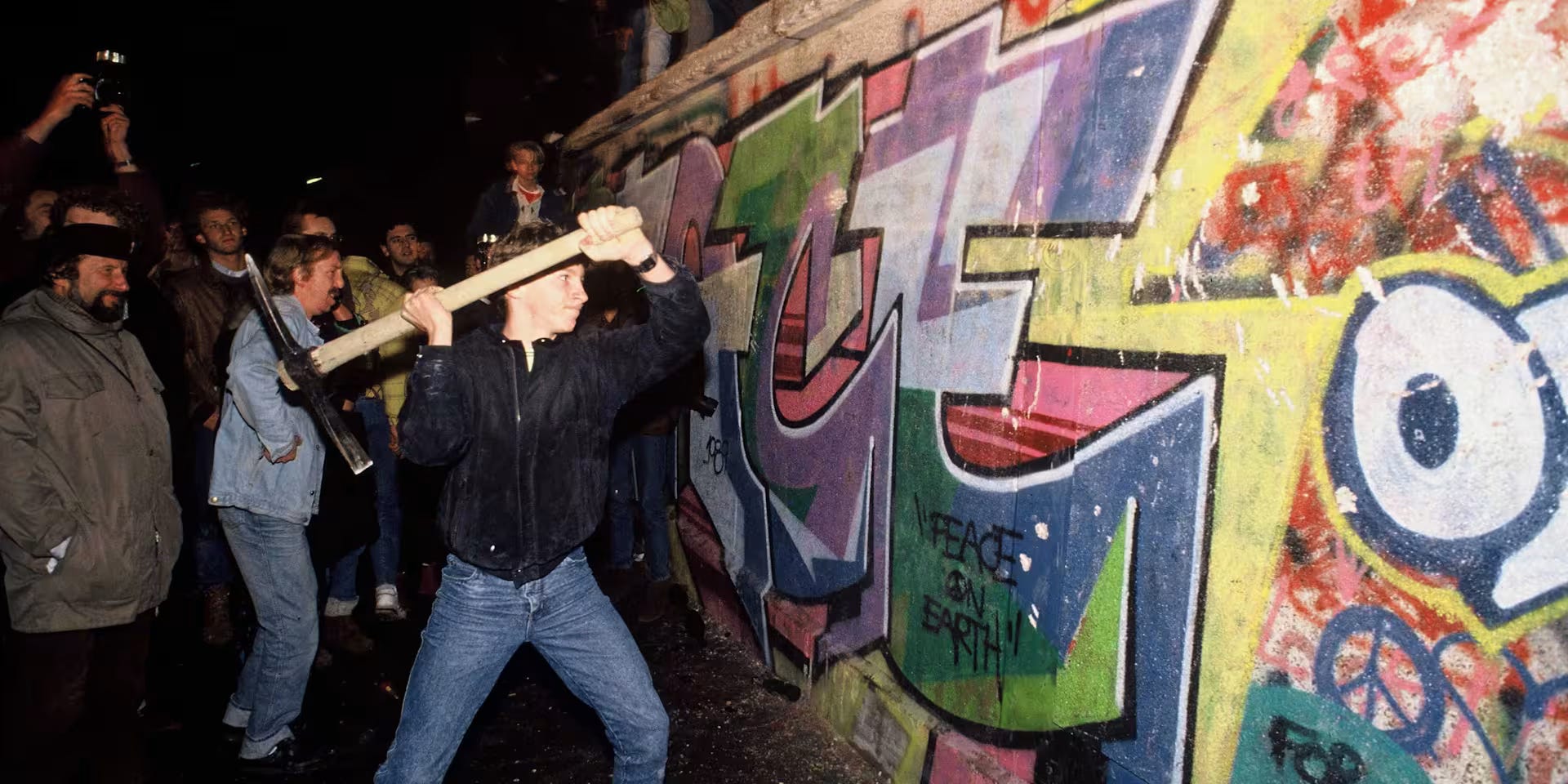
“The 80s was a brutal, brutal time for people. It was a fucking mess and people forget that. It was a tremendous strife. Socio political tensions everywhere.” So said idiot actor Ryan Reynolds in promoting his new movie Mayday.
Okay, Reynolds was 4 years-old when Ronald Reagan was elected president, and true, he is Canadian, but Mayday is set in 1987. It is about the 1980s. He plays an American pilot. That Reynolds could have such a low opinion of the most successful decade in anyone’s memory is an indictment of the Hollywood that has groomed him. “We were still pretty fresh off a Cuban missile crisis,” Reynolds insisted. “It was really scary.” Reynolds apparently did not consult with anyone who lived east of the Berlin wall, was alive for the 1962 Cuban missile crisis, or who voted for Ronald Reagan.
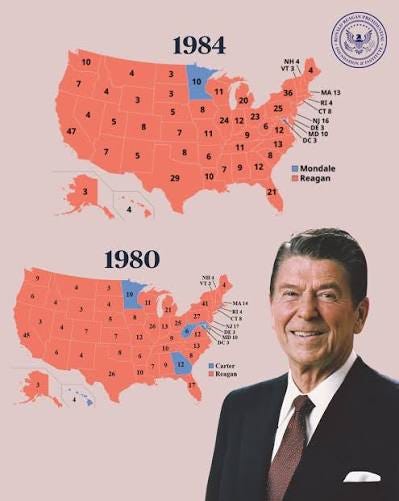
President Reagan did not appear to scare the voters
Most Americans did vote for Reagan. So effective was he as president, both economically and geopolitically, that he won 49 states in 1984 and would have won all 50 had his campaign not eased off Minnesota to spare Walter Mondale the humiliation. Reagan won big despite the left wing language war launched against him.
To sabotage the Reagan presidency, the Left relied on its allies in the media and higher education. Through these institutions, leftists controlled the language and still do. One powerful new word in their arsenal was “homelessness.” To counter the obvious success of Reaganomics, they introduced the word into the everyday stream of the evening news. Before Reagan, the word was all but unused.
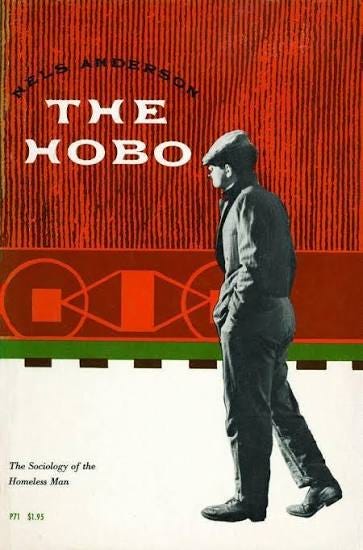
The “homeless” had always been among us, but historically we had allowed them a certain dignity. Roger Miller’s 1965 hit single “King of the Road” captured that spirit. “No phone, no pool, no pets/ I ain’t got no cigarettes,” sang Miller, but his “King” knew how to solve the problem, “Ah, but two hours of pushing broom/ Buys a eight by twelve four-bit room.” Replacing “hobo” with “homeless” turned free agents into faux victims. This semantic shift would not have happened had Jimmy Carter prevailed in 1980.
Thanks to the Google Books Ngram Viewer, we can trace the astonishing surge in the use of the word “homelessness.” Although the graph expresses frequency of use as a percentage of words in play at a given time, for simplicity sake I will use whole numbers.
As the numbers show, up until the late 1970s, the word “homelessness” was rarely ever used. There was a slight uptick in the late 1970s to 153 in 1980. By 1988, that number stood at 923, a six-fold increase. That number kept climbing until 1992 when it peaked at 1199 during George H.W. Bush’s last year in office, an eight-fold increase since 1980.
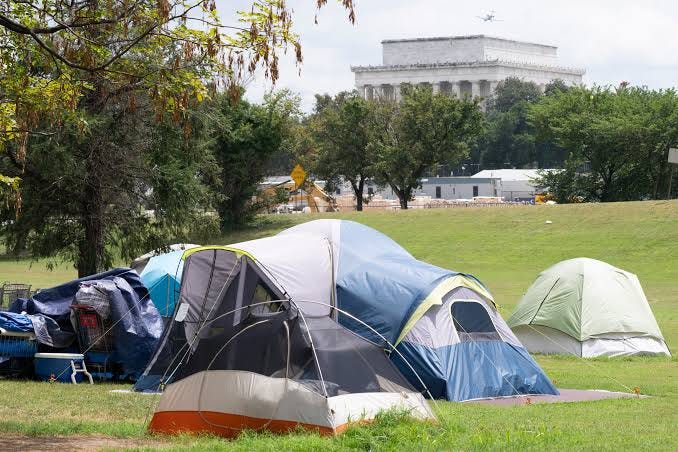
The Left now prefers “unhoused,” but the problem was never houses or homes
This spike in word frequency had little to do with deinstitutionalization of the mentally ill, a process that began in the mid-1950s and continued apace for the next few decades. And it had nothing to do with any dislocations caused by Reaganomics. The “inequality” that surged in the 1980s, like “homelessness,” only happened on paper. And yes, drug use would contribute to homelessness over time—Reynolds cited “cocaine”—but Nancy was telling America to “just say no.” It was Hollywood that was just saying “yes.”
In any case with Democrat Bill Clinton’s ascent to the White House in 1993, the word “homelessness”—and presumably the problem—abated. Its use frequency did not pass the Bush peak until 2015 when Trump announced for presidency, and it has kept ascending from there.
When the supply of racism outstrips the demand…
The word “racism,” still the ordnance of choice in the Left’s WMD stockpile, registered an initial spike in the 1960s when the nation was experiencing real racial turmoil. The frequency of use peaked in 1974 and, as racial tension eased, the use of the word declined.
As if by magic, “racism” started surging again in 1981, Reagan’s first year in office, and would continue to rise with a bullet through 2020 save for a slight reprieve during Obama’s first two years in office, 2009-2010. In 2020, the last year charted, the word “racism” was being used roughly 40 times more frequently than it was in 1960 when, undoubtedly, there was a whole lot more racism.
The term “nuclear winter” just happened to surface in 1983
One other phenomenon deserves mention, and it is best short-handed by the word “nuclear.” Yes, 1962, the year of the Cuban missile crisis, was a scary time. The word “nuclear” appeared with five times more frequency in 1962 than it had even in 1952 at the height of the Korean War. Word usage remained at or about the 1962 level through 1965, likely driven by the Left’s need to scare voters away from Republican Barry Goldwater.
After 1965, word frequency declined until 1969 when the anti-war movement reached critical mass. The word “nuclear” inched up throughout the 1970s, picked up the pace in 1980, and exploded in 1983. Future president Barack Obama played his own small part in that explosion. In 1983, he called for a “nuclear-free world” in a garbled essay titled “Breaking The War Mentality.”
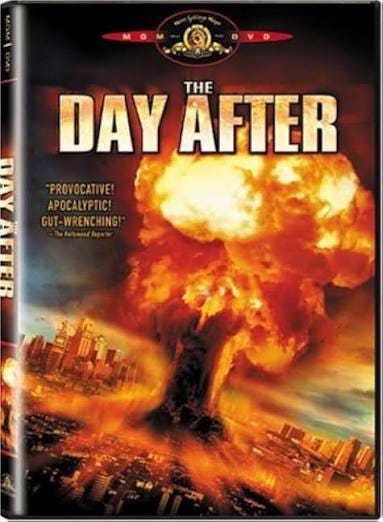
1983’s The Day After represented a high water mark in Soviet agitprop
“Barack Obama’s journalistic voice was edgy with disdain for what he called ‘the relentless, often silent spread of militarism in the country’ amid ‘the growing threat of war,’” the New York Times insisted years later. The Times did not mention that the “growing threat of war” was a KGB hobgoblin designed to scare the West out of placing Pershing Missiles in West Germany. Once Reagan went ahead and installed the missiles, the frequency of the word “nuclear” dropped off almost as precipitously as the frequency of goofy anti-nuke essays by college commies.
No, Ryan, the 1980s were not “really scary.” They were pretend scary, a pretense goosed along by the Hollywood that made you rich and stupid.
I enjoyed the 80’s.
"Rich and stupid"
Bang on!