

In the way of definition, a great movie for conservatives is simply a great movie whose values conservatives can respect and whose protagonists conservatives can admire. This definition excludes fun right wing movies like, say, the original versions of Red Dawn, Invasion of the Body Snatchers, and Ghostbusters.
The definition also excludes genuinely great movies like The Godfather, Chinatown, and Oppenheimer. The first two exclusions should be self evident, but the third is more subtle. For all his exceptional value to the cause in World War II, Robert J. Oppenheimer—in the film and in real life—was undone by either his complicity with the Soviets or his ignorance of the Soviet threat, a fatal flaw in either case.
Be aware, of course, that many of the actors involved, and even the directors, had no idea they were making films that would appeal to conservatives. On to the top 10 in reverse order.
10—Shane. “A gun is a tool, Marian; no better or no worse than any other tool: an axe, a shovel or anything. A gun is as good or as bad as the man using it. Remember that?” So explains Shane, the gunman hero of the stirring, visually lush 1953 movie of the same name. This is the rare quality western that not only celebrates the values of home, marriage, family, community, and fatherhood, but that also makes a theoretical and practical defense of the Second Amendment. For all their entertainment value, Clint Eastwood westerns do little of the above.

9—Casablanca. There is no disputing the greatness of the film. It has a tight plot, a perfect cast, and quite possibly the best screenplay ever. The average American can misquote about 20 of its lines. One caveat is that the leftist screenwriters, as expected, inserted a commie dog whistle into the screenplay, namely that Rick “fought in Spain, on the Loyalist side.” Few heard it then. Almost no one hears its today. What endures is the film’s celebration of courage, patriotism, and self-sacrifice, and, of course, a youthful Ingrid Bergman preserved in amber.
8—Apollo 13. Engineers rarely get their due in movies, but Apollo 13 is a stirring exception. This film, more tightly constructed than the eponymous space capsule, highlights the ingenuity, resourcefulness, and courage of the American male. Produced in 1995, Apollo 13 makes no concessions to political correctness. Will contrast nicely with Blue Origin: Babes in Space should that film ever be made.

7—Pride and Prejudice. I confess to watching this 2005 film annually for the smart dialogue, the gorgeous scenery, and, well, of course, star Keira Knightley. Like all Jane Austen plots, this one involves the everyday challenge of making the right moral choices and the consequences of making the wrong ones. Like the others, it also highlights the simple glory of romance. What distinguishes Pride and Prejudice is its focus on the chaotic beauty of family and the benefits of having a wise, loving father at the head of it.

6—Saving Private Ryan. It is not just the superior production values and dialogue that elevate this film above a dozen other worthy war films. What sets this movie apart is its recognition of the distinctive ingenuity and morality of the American citizen soldier. “Every day I think about what you said to me that day on the bridge,” says an aging James Ryan at Captain Miller’s grave. “I tried to live my life the best that I could. I hope that was enough. I hope that, at least in your eyes, I've earned what all of you have done for me.” Amen.
5—Master and Commander. Based on a novel (or three) by the uncannily gifted Patrick O’Brian, this epic film, set during the Napoleonic wars, did not do quite well enough to generate a sequel. Too bad. There were another twenty movie-ready novels waiting in the wings. O’Brian fans could not have hoped for a better choice to play Captain Jack Aubrey than Russell Crowe. The Aubrey character, an exemplar of manly virtue, provides a master class in inspired leadership.

4—Braveheart. In 1995 Mel Gibson gave us Braveheart as a wake-up call. “They’ll never take our freedom,” William Wallace told his followers, his audience included. As America slipped into a passive acceptance of cultural marxism. we needed the reminder. Breathtaking scenery, a passionate romance, a stirring score, and a bravado performance by Gibson make for epic entertainment, Be warned: the violence is graphic, not for the faint of heart.
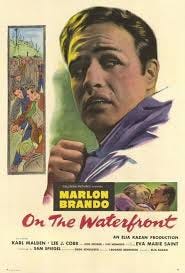
3—On the Waterfront. In 1952, leftist Hollywood ostracized liberal anti-communist director Elia Kazan for his willingness to identify the Stalinists in his midst. Two years later, Kazan fought back with On the Waterfront, his in-your-face response. Inspired by his new girlfriend and encouraged by the parish priest, Marlon Brando’s Terry Malloy character makes an heroic stand against the union thugs (read: commies) dictating the terms of life—and death—on the Hoboken waterfront. At risk to his own life, he names names. In words that Kazan might have said to the Hollywood bullies, Terry Malloy tells union boss Johnny Friendly, “You think you're God Almighty, but you know what you are? You're a cheap, lousy, dirty, stinkin' mug! And I'm glad what I done to you, ya hear that? I'm glad what I done!” Great performance by Brando, haunting score, and a powerful message.

2—The Lives of Others. The flat out best movie ever made about communism, this brilliant German film sneaks up on you. I was halfway through this thriller before I realized that the film’s seeming villain was its hero. Set in 1984 East Germany, The Lives of Others shows how corrosive to the soul is even a relatively benign socialist police state. Imagine self-censoring your art to please the state or losing your job for telling a joke! The film’s ending is as close to perfect as a movie gets.
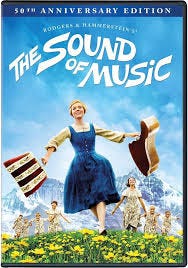
1—The Sound of Music. Jackie Chan’s favorite movie, this 1965 classic hits all the right notes, both cinematically and morally. It has spectacular cinematography, a memorable Rogers & Hammerstein score, and the ideal lead in Julie Andrews. It honors faith and family and celebrates courage, romance, and patriotism. Set against the Nazi takeover of Austria, the film has more moral punch than your average musical.
A few years back, I talked a few of my male friends into watching the film. They questioned my testosterone levels when I recommended it, but were tearfully singing “Climb Every Mountain” at movie’s end. Man up and enjoy.
Each week, as a special bonus for paid subscribers, I will be rolling out in serial form my current book-in-progress: THE EMPIRE OF LIES: THE LEFT’S 30-YEAR WAR ON TRUTH, 1994-2024.
Ahhh, On the Waterfront. My father played a bit part in that as a union thug/heavy. Mel Archer, acted inhalf a dozen. The Big Trees with Kirk Douglas was one. Died way to young at 53, I was 13. Miss him forever.
Well done, Jack ! Only a couple on your list I haven’t seen yet; soon to be corrected. If I might add a #11 co-tie: “Bridge on the River Kwai” (although compromising of your chosen definition by its portrayal of futility overcoming noble and heroic effort) and “The Railway Man” (true British soldier’s account, same Japanese WWII prisoner work camp environment of horrific brutality eventually defeated in one man’s life by exercising complete forgiveness.)